"For someone your age you really should stop doing ..." Not the words you want to hear from anyone but those were precisely the words the Emergency Room doctor used to begin the conversation with me last Sunday evening. To set the full context for the conversation I had been working on replacing some rotted out fascia boards on my house that included the "bird box" on the gable end. Since this house is built on a pier and beam foundation with a 3 foot crawl space the roof line is about 10 feet off the ground. I had set up an adjustable step ladder and was standing on the second from the top wrung piecing the bird box together. The ground was a little bit uneven and the piece I was replacing was about 5 feet long so it required stretching a little bit to reach the ends if I didn't want to reposition the ladder. As I was stretching to the uphill side the ladder decided it no longer wanted to stand upright and deposited me on my back on the ground below. In my mind my ego was far more damaged than my body but my wife and daughter insisted I get medically checked out.
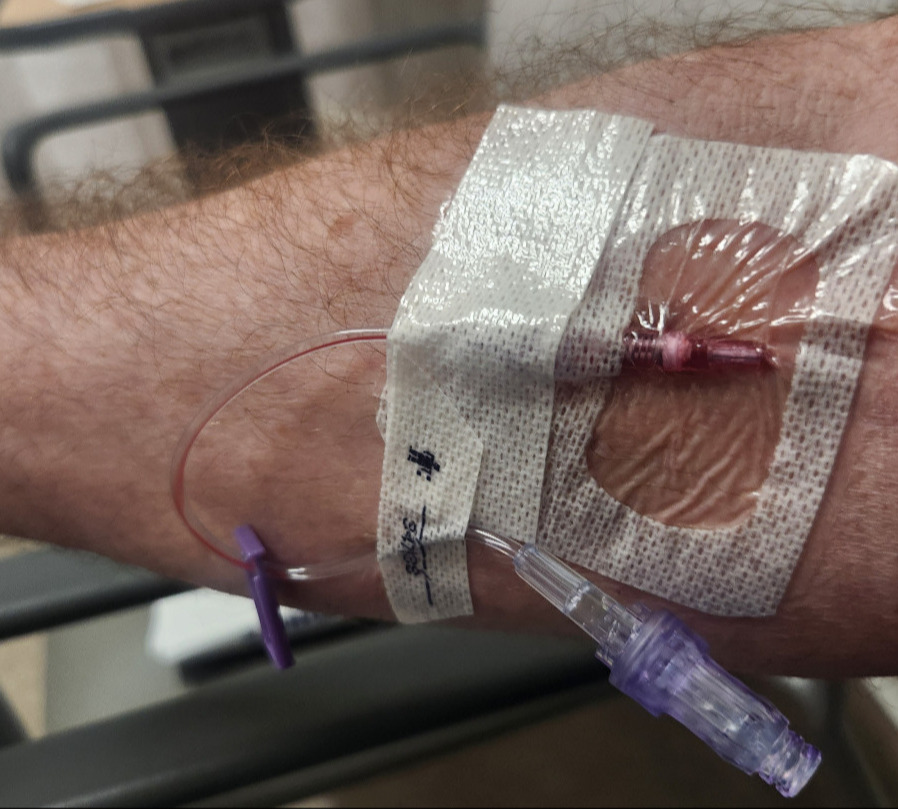
After a 30 minute urgent care visit that ended with a STAT referral to the local Emergency Room where they could perform a more detailed scan for internal injuries I found myself waiting in an overcrowded waiting room for an emergency department that seemed in no hurry to see me (to be fair they were very busy and I understand the different levels of urgency in an ER). When the doctor finally saw me (about 3 hours into a 6 hour visit) and discovered that I had fallen off a ladder he opened his conversation with me with "for someone your age you really should stop working off ladders that high up." What did he mean "for someone MY AGE"? You say things like that to OLD people and I am NOT old. But that is not what I want to write about tonight - I really want to focus on the discharge instructions that I was given when they finally sent me home.
After completing a CT scan with contrast it was determined that I had sustained no broken bones or other internal injuries. The extent of the damage was a deep muscle contusion around my chest which would likely cause some significant discomfort for a week or two as it healed. The verbal discharge instructions were take it easy and don't do anything that will stress the chest muscles and alternate Tylenol and Advil for the pain. The written discharge instructions were more interesting - they use an automated AI (artificial intelligence) system to read the diagnosis from the chart, assess any notes placed in the chart by the doctor then provide the written discharge instructions. What the system found in the chart was 63 year old (OLD) male and fall. The instructions it gave was for how OLD people can avoid falls around the house - like installing grab bars near the toilet and in the shower, making sure floors are clear of obstacles, no loose carpets, no uneven sidewalks, and finally make sure the yard is well lit. Absolutely NONE of this had ANYTHING to do with why I fell. The real reason for my fall was I climbed an unsafe ladder and did something dumb! Amazingly what was missing was don't be lazy and don't do dumb things!
In academia we have wrestled for the past few years with what has been termed AI hallucinations and AI slop. AI hallucinations are when AI doesn't know the answer so it just makes one up, and AI slop is when AI has hallucinated so frequently it thinks it's hallucinations are correct. The output you get from AI is only as good as the input - it has been fed incomplete and inaccurate information for so long it no longer knows what is correct. I am sure that most of the time these AI generated discharge plans add value, but in my case it simply demonstrated how clueless and disconnected it was.
I have wondered this week how often my spiritual life is like AI slop. I read the passage in Luke 12:11 & 12 where we are told not to worry about what we will say in defense of our faith when tested but wonder how can the Holy Spirit direct us what to say if we have never fed the "correct" information into our brains in the first place. How will we recognize truth in times of crisis if we have not been studying truth all along the way. If I haven't been diligent with the input how can I expect quality output in the end?